Archaeology & Scripture
What the ground has given back, weighed honestly
"A false balance is abomination to the LORD: but a just weight is his delight" (Proverbs 11:1). Archaeology tempts both sides to use a false weight. One side treats every find as proof and every gap as nothing; the other treats every gap as a disproof and every find as a coincidence. This section uses the same scale for both. It takes each discovery one at a time and asks three questions: what it shows, what it does not show, and where honest scholars still divide. "Prove all things; hold fast that which is good" (1 Thessalonians 5:21).
A find is a fact; an identification is a claim about it. A stone with an inscription is a fact. Saying which king it names, or which grave a building covers, is an identification, and each page says how strong that identification is. Silence is not a verdict. For much of the nineteenth century there was no evidence outside the Bible for the Hittites, and for most of the twentieth there was none for King David. Absence of evidence is not always evidence of absence, and the ground has surprised the critics more than once. But the same rule cuts both ways. A tradition, however old, is not an excavation, and where a site rests on tradition the page says so.
The text itself
How we know the Old Testament we read is the one the ancients read.
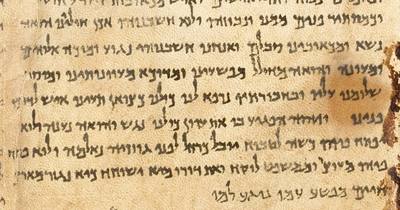
The Great Isaiah Scroll
Found in a cave by the Dead Sea, copied about 150 to 100 BC: all 66 chapters of Isaiah, including the Servant who is pierced and then sees light.
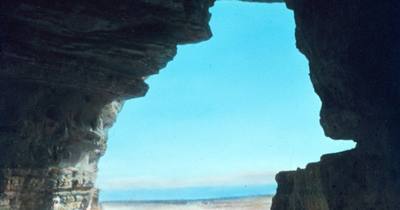
The Scroll in the Jar
A letter. Isaiah 53 was sealed in a jar more than a century before the cross. What that proves, what it does not, and the line in it most English Bibles leave out. With a reading.
Kings and places
People and places the Bible names, found in the ground.
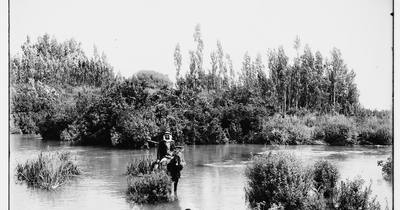
The Tel Dan Stele: "The House of David"
Broken pieces of an Aramean victory stone, found in 1993 and 1994, name a king of "the house of David," about a century and a half after David.
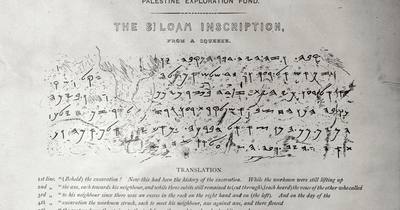
Hezekiah's Tunnel and the Siloam Inscription
A 533-metre tunnel cut through the rock under Jerusalem, and the inscription left by the two teams who met in the middle. Scripture says Hezekiah made it.
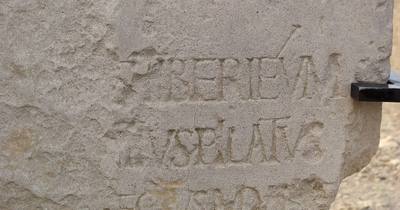
The Pilate Stone
A dedication stone from Caesarea names "Pontius Pilate, prefect of Judea," the only inscription from his lifetime that names him.
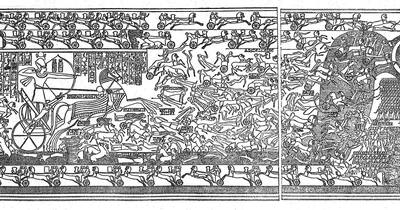
The Hittites
Named again and again in the Bible and once doubted by critics, until their capital and ten thousand tablets were dug up in 1906. The story, and its honest limits.
The graves of the fathers
Where Scripture says the patriarchs were laid, and how much of that the ground can confirm.
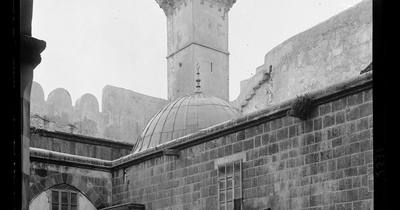
The Cave of Machpelah
The field and cave Abraham bought at Hebron, the burial place of three patriarchs and three matriarchs, under a wall built in Herod's time. What is known, and what is only tradition.
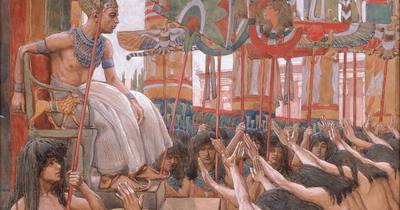
Joseph's Bones
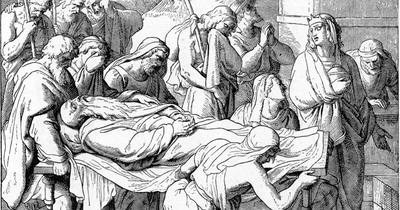
Joseph made Israel swear to carry his bones out of Egypt, and they were buried at Shechem. The oath in Scripture, and the contested tomb at Nablus.
The Graves That Wait
A letter. The only land Abraham owned was a grave, and Joseph gave orders for his bones. The fathers were buried in a promise, and one grave is empty. With a reading.