Science & Scripture
The same facts, a different conclusion
There is an old story told about Abraham Lincoln, defending a client against a case built on a list of undisputed facts. It does not appear in the standard collections of his anecdotes and no case is ever named, so take it as a story rather than as history — which, on this page of all pages, is the point. A farm boy, it goes, came tearing into the kitchen, breathless: Pa, Pa, I climbed up to the hayloft, and sister Sallie and the hired man were up there, and she was a-hoisting up her skirts and he was a-dropping his britches, and Pa, I do believe they are fixing to pee all over the hay! The father did not miss a beat. "Son," he said, "you have got every one of your facts exactly right, but you have surely drawn the wrong conclusion." Whoever first told it, that is nearly the whole problem of origins in one sentence. The fossils, the genes, the layers of rock, the light reaching us from distant stars: these are facts, and most of the time both sides of the debate are looking at the very same ones. Where they part company is rarely the facts; it is the conclusion drawn from them, the story laid over the evidence. A measurement is not a conclusion. This section keeps the two apart, and weighs each famous argument one honest claim at a time.
Three kinds of source get three kinds of weight. Mainstream consensus (the journals, the surveys, the space agencies) is stated fairly and accurately, always. Legitimate creation science (Answers in Genesis, the Institute for Creation Research, Creation Ministries International) is a sourced minority case that owns its minority status and meets the strongest rebuttal head-on. Debunked claims are not given equal standing; at most they are named and answered. The test for every argument is the same: does it survive honest contact with the strongest mainstream reply? If yes, both sides are given. If no, it is flagged as a popular claim with a known answer. Credibility first: overreach helps no one, least of all the truth.
How to weigh a claim
Read these first. Every page below turns on the difference between a measurement and the story laid over it.
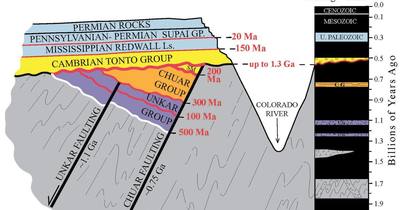
The Label Already on the Data
The one move behind this whole section, seen four times: the canyon, the fossil, the mutation, the chart in a lab report. How to peel the story off the measurement underneath.
Science and the Unrepeatable Past
Can science speak to a one-time past? "Were you there?" answered honestly: the past is testable, and where the deep-past claims really carry their weight.
Arguments Worth Retiring
Moon dust, the shrinking sun, Paluxy tracks, the salty sea: popular claims the evidence passed by, explored fairly. Plus two legends named as legends.
Not Meant to Be Blind
The wider frame: faith and reason were never enemies. The conviction that the world is the orderly work of a reasonable God is the soil modern science grew in.
The age of the earth
Dating methods and the distances of the stars: what each one measures, what it assumes, and where the honest fault lines are.
Radiometric Dating & the Age of the Earth
The long-range clocks: how the 4.54-billion-year figure is reached, the young-earth case at full strength, and RATE's own unsolved heat problem.
Carbon-14 & the Limits of Deep Time
How radiocarbon dating actually works, why it cannot reach a dinosaur, and the honest fault line in the trace-carbon-14 reports.
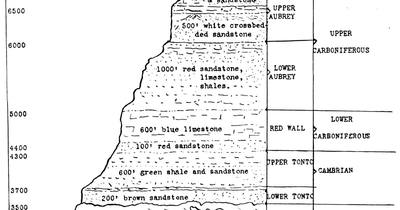
The Circular-Dating Objection
Are fossils dated by the rocks and the rocks by the fossils? Weighed honestly: why the slogan doesn't hold, and the firmer ground it points to.
Ice Cores and Deep Time
Annual layers in the Greenland and Antarctic ice counted to over 110,000 years, corroborated by volcanic ash markers. The mainstream case at full strength, the creation-science response, and a straight verdict on one of the harder data sets for a young earth.
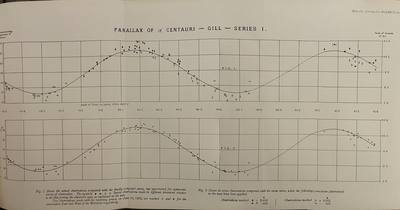
The Distances of the Stars
How we measure the stars, how far the direct method really reaches, and the distant-starlight problem in a young universe.
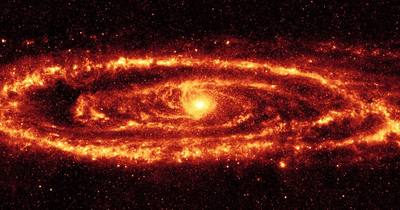
Six Days and the Light of Distant Stars
Relativity, time dilation, and the starlight a young creation has to answer for: the competing models (Humphreys, Schroeder, Lisle) stated honestly.
The flood, the fossils, and us
Rock, water, bone. The flood weighed honestly, the fossil record read closely, and the hominids at full strength.

Noah's Flood and the Rocks
Flood geology weighed claim by claim: marine fossils on mountaintops, the Grand Canyon, polystrate trees, and catastrophe here and on Mars.
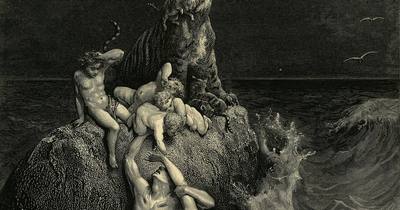
How the Great Flood Happened
The creationist models, catastrophic plate tectonics, lower pre-Flood mountains, and the vapor canopy many were taught, explored and finished honestly.
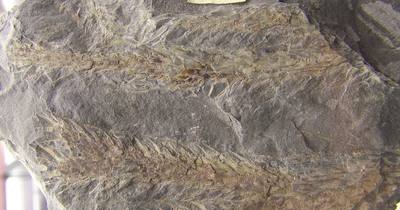
Polystrate Fossils
Trees standing through many layers: the rapid-burial point everyone grants, and the single-global-flood conclusion it doesn't reach.
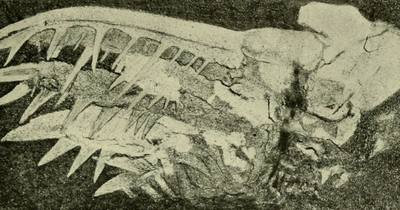
The Cambrian Explosion
Most major animal body plans appear in a geological eye-blink: the fossil record's most awkward moment for a slow tree, weighed honestly.

Dinosaur Soft Tissue
The real Schweitzer T. rex finding, the young-earth claim, and why the discoverer herself, an evangelical Christian, says it has been misused.
Did We Come From Apes?
The hominid fossils weighed honestly: upright Lucy and the cultured Neanderthals at full strength, the case that the bones sort into apes and humans, and why Piltdown and Nebraska Man show science correcting itself.
Life, information, and design
From mutation to the genetic code: what is observed and agreed, and where the real dispute begins.
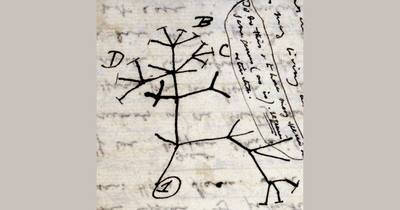
Microevolution, Yes; Macroevolution?
Mutation, variation, and speciation are real and observed; the leap to universal common descent, and the transitional-fossil question, is the live dispute.
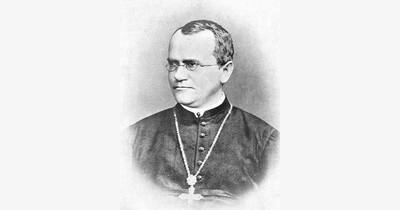
Genetic Entropy
Cornell geneticist John Sanford argues the genome is slowly accumulating damage faster than selection can remove it — deteriorating, not improving. The case, the mainstream response on selection and parameter choice, and the honest verdict.
DNA and the Question of Information
The cell runs a genetic code: arbitrary, rule-based, proofread. The fingerprint of a mind, or a powerful metaphor for chemistry? Weighed honestly.
Specified Complexity
Dembski's mathematical argument that DNA carries complex specified information — the kind only minds produce. The probability calculations, the mainstream counter on cumulative selection and the NFL theorems, and where the argument is strongest and where it strains.
Irreducible Complexity
Behe's bacterial flagellum: a molecular motor that only works when all 30 proteins are present. The strongest ID argument, the co-option counter, and the honest verdict on what it shows and what it doesn't.
The Origin of Life
The chemistry of life from non-life is openly unsolved. Miller-Urey, the RNA world, and the information problem, argued from presence, not gaps.
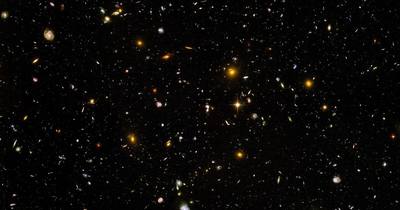
The Fine-Tuning of the Universe
The design card that survives, because secular physicists concede the fact: the constants tuned on a razor's edge, and the three honest ways to read it.
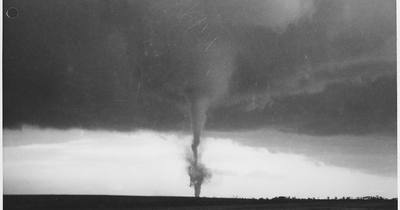
The Tornado in the Junkyard
Chance, cumulative selection, and irreducible complexity. The real odds of life, where the design inference is strongest, and where it overreaches.

Radiohalos
The polonium-halo argument for a young earth, and why even creationists are divided on it.
Arguments for God
Three classical arguments, each stated at its strongest and then met with its strongest reply.
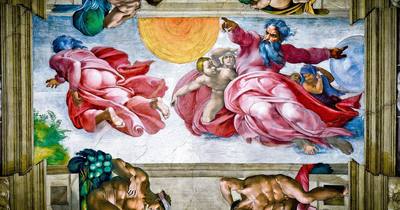
The Cosmological Argument
The Kalam: the universe began, whatever begins has a cause, and what that cause would have to be. The Big Bang and the BGV theorem, with the objections answered.
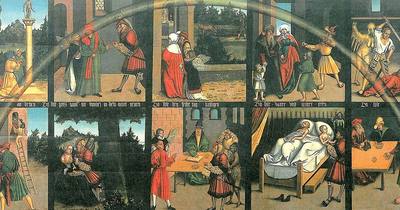
The Moral Argument
If right and wrong are real, not invented and not merely conventional, something has to ground them. The argument, and the evolutionary reply.
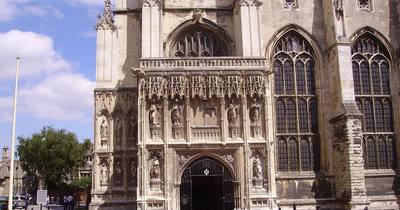
The Ontological Argument
Anselm’s claim that the greatest conceivable being must exist in reality, Gaunilo’s island, and Plantinga’s modal version.
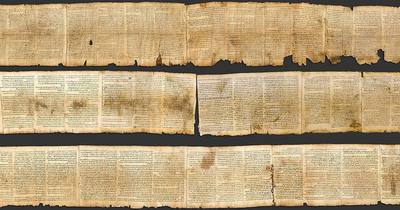
Archaeology
What the ground has given back, weighed with one scale for both sides: what each find shows, what it does not show, and where honest scholars still divide.
The mind
Psychology, psychiatry, and an afflicted mind: what the church has said, what medicine found, and what neither is allowed to conclude. Kierkegaard belongs here as much as among the witnesses; he was doing psychology before the word meant a clinic.
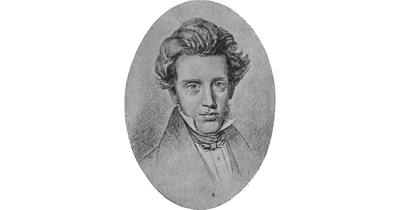
Kierkegaard
The psychology that begins with God. Despair anatomised a century before the clinics, anxiety as the dizziness of freedom, and a self that is only itself in relation to the One who made it.
Faith & Psychology
Kierkegaard, Freud and Jung on the self: the soul mapped before God, explained away as illusion, and half-recovered through the occult.
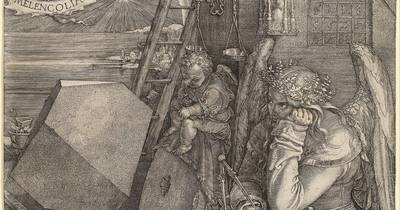
The Noonday Demon
Lithium springs prescribed in the second century, a demon that came from a Septuagint word, and a thorn that was both given and satanic. The body, the spirit, and the fault.
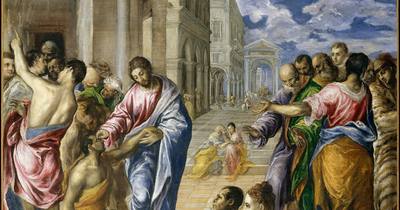
When the Mind Goes
Is dementia a judgment? Is it a truth serum? The wondering taken seriously, and the one inference Jesus answered with a flat “Neither.”
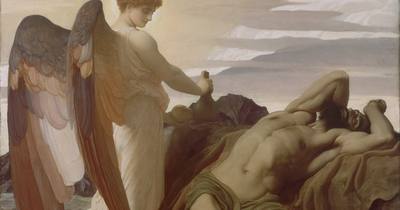
Overwhelmed
For the one who has done too much for too long and now cannot start. Elijah’s bread, Nehemiah’s wall in pieces, the body beside you, and the God who works the willing.

No Spark
ADHD, depression, and the fast rewards that spend what spark there is. Out of spoons, the slow reward the Bible calls sowing, two doors that are not the same, and the God who is the spark.
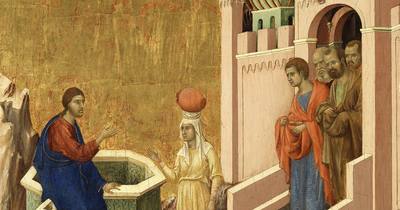
The Past in the Present
For the one still fighting a thing that already happened. The pattern you keep repeating, the fate you are told to love, the favour you are told to ask, and the Person who did each one first.
More in this section: The Church & Creation Today. A working principle runs through every page here: a calculation is not a conclusion, and a fact is not a worldview. "A false balance is abomination to the LORD: but a just weight is his delight" (Proverbs 11:1). The heavens, the rocks, and the living cell are a true witness, "the things that are made" by which his power is "clearly seen" (Romans 1:20), and reading a Maker behind them is a reasonable inference, the best explanation of the evidence, offered here as exactly that and not as a laboratory proof. Faithful Christians differ on the age of the earth; it has never been the hinge of the faith. What these pages ask is only a just weight: weigh the method honestly, weigh the anomalies honestly, and do not call either side fringe to dodge the harder work of looking.