Faith & Writing
Saulved

Faith & Writing

Notes, sources, and things worth talking through together

A small and growing collection of writing on faith, much of it tracing where the modern church has drifted from the early one, tested against Scripture, the earliest fathers, and plain reading rather than anyone's summary on trust. The aim is the one Paul names: to take every thought captive to the obedience of Christ. If you only read one, read What I Want You to Know, the heart of it all in one place; for the long story behind it, start with The Whole Story. The rest are branches.

Where we can meet

Every tradition has drifted, Catholics, the Orthodox, and Protestants alike, and often from their own confessions. The only place people can truly meet is at the truth. And beyond the Scriptures themselves, the closest record of that truth we have is what the earliest believers actually held, before the churches hardened into institutions. So that is the measure these pages keep reaching for: the Bible, read in the company of the church's first generations.

Open the Study Bible →
The whole Bible in the King James and Berean translations, side by side, with commentary on each verse.

Heard With the Fathers →
Fifty-seven keystone passages, each in the verbatim words of the earliest church, with a plain restatement and where the traditions diverge.

Start here

New here? Begin with these two: the heart of it all, and the one story behind every other page.

What I Want You to Know The heart of it all, in one place: you were made for relationship; He came and won; salvation is that living relationship; your "yes" is real; the King already reigns; the door home is always open. If you read one, read this. Open → The Whole Story Start here. From the garden to the city, the Bible as one relationship: a God who made us for Himself, lost us, and would not stop coming after us. Every other page is a branch of this one. Open →

Christ, the Spirit & the creeds

Who God is, before anything else: the Word made flesh, the Spirit who is Lord, what the cross did, and what the whole early church confessed.

The Word Made Flesh The most staggering sentence in any book: the Word who was God became actual flesh, God among us. Guarded by the early church from both sides, not a phantom, not a demigod, but true God and true man. Open → The Holy Spirit Not a force or an influence but God Himself, the Lord and Giver of Life, at work from the first verse of Genesis to Pentecost and now. On the Spirit in the Old Testament, His full deity, and why He resists our systems. Open → What Did the Cross Do? For its first thousand years the church saw the cross mainly as victory, rescue, and healing, not only a legal verdict. Christus Victor, Irenaeus, the harrowing of hell, and C.S. Lewis, fair to penal substitution but recovering the larger view. Open → What the Early Church Confessed Before the formal creeds, a shared rule of faith. The creeds did not add to Scripture; they distilled it, and they guard the essentials where Catholic, Orthodox, and Protestant still meet. Open →

The Divine Voices & Names

Three Persons, three reserved colors. Where God the Father, the Son, and the Spirit speak or are named in Scripture, each is marked in His own color in the Study Bible, and gathered here: the names that reveal who He is, and the words He actually said.

The Names of God Yahweh, Adonai, Elohim, El Shaddai, and the compound names of the LORD, each disclosed at the moment His people most needed it. Every name a window onto who He is. Open → The Sayings of God Not only His names but His own words: He spoke and there was light, called a wanderer into a nation, comforted exiles, raised dry bones. God's sayings gathered from creation to the prophets, and the angel of the LORD who speaks as God. Open → The Names of Christ Yeshua, Immanuel, the Word, the Lamb, the Good Shepherd, the Alpha and Omega. No single name could hold Him, so Scripture gives Him many, and each is the same gospel said again. Open → The Names of the Holy Spirit The Comforter, the Spirit of truth, the Spirit of adoption, the earnest of our inheritance. The quietest Person of the Trinity has names too, and each tells what He is doing in you now. Open → The Words of Christ The red-letter Gospel by itself: every word the Lord Jesus spoke, from Matthew to John in biblical order, rendered in His own color. Open → The Words of the Spirit Where the Holy Spirit speaks in His own voice, gathered: His word in Acts, His warning of the latter days, His witness through the prophets, and His voice in the Revelation. Open → The Colors of the Voices Why we color the divine voices in Scripture: the Father in gold, the Son in purple, the Spirit in blue. The color never changes a letter of the text; it only lets the reader see who is speaking. Open →

Salvation & grace

How a person is saved and kept: grace neither cheap nor a cage, a faith that lives and acts, held against both legalism and license.
The Security of Salvation Can a Christian fall away? Between once-saved-always-saved and the Calvinist lock there is an older answer the early church held: a living relationship, kept by grace through faith, that you can truly leave and truly come home to. Open → What Does It Mean to Be Born Again? Not a single emotional moment, and not postponed to the resurrection only. The fuller, early-church answer: you have been born again, you are being made new, and you will be born into glory. Has been, is being, will be. Open → Lord, or Just Savior? Can you take Jesus as Savior without submitting to Him as Lord? "Free Grace" says yes; but the earliest confession that saved was "Jesus is Lord," and the early church knew no such split. Open → Hyper-Grace: When Grace Becomes a License The opposite ditch from legalism: the teaching that grace covers everything so sin no longer matters. Paul slammed the door on it. Grace is the power to rise from sin, not permission to stay in it. Open → The Sinner's Prayer Becoming a Christian by praying one short prayer, "asking Jesus into your heart," is a modern formula (Finney to Graham). The New Testament and early church: repentance, faith, baptism, and a life in the body. Open → TULIP: The Five Points of Calvinism A fair look at the five points and the Scriptures that strain each: God wills all to be saved, Christ died for the world, grace can be resisted, branches in the vine can be cut off. In respect, not hostility. Open → Free Will and the Plan That Cannot Fail The mystery Scripture holds without flinching: a plan that cannot fail, working through and despite the freedom God gave a sinful people. Joseph's pit and the cross, where free evil served the surest good. Neither fatalism nor chance. Open → Predestination and Free Will Some truths Scripture holds in tension on purpose. The sovereignty case and the free-will case, each at its strongest, and why the honest posture is to hold the mystery open rather than collapse it to feel safe. Open → The Soul That Sinneth (Ezekiel) The righteous can turn away and die, each answers for his own sin, not his father’s, and that one rule unravels inherited guilt and a puzzle about Christ. With the presumption, heritage or “elect,” that misses God. Open → Born Fallen, Not Born Guilty What we inherit from Adam, and what we don’t: a fallen, mortal nature (the oldest reading) or personal guilt for his sin. Psalm 51:5 met head-on, the Greek fathers, and how it pairs with the cross. Open → Philippians: The Road Between Two Ditches Paul fights legalism and license at once and holds the narrow road: work out your salvation, for it is God who works in you, with the mind of Christ at the center. Open → Faith Is a Verb Over and over the saved did something: the blood struck on the door, Rahab's scarlet cord, Esther's risk, the look at the serpent. Faith in Scripture is alive and acting, not a decision banked and forgotten. On active faith, Hebrews, and the security of salvation. Open → The Vine Israel was God's vine and it failed; Jesus is the true vine. Abide or be cut off, grafted in and kept by faith, from Isaiah's vineyard to John 15. The whole gospel as a plant. Open → The Parables of Readiness & Judgment The weeds burned first, the virgins shut out, the wedding guest cast out, the buried talent, the servant who drank and beat, the seed that withered. Jesus's stories of who is ready, who is taken, and who endures. Open → The First Shall Be Last The gospel's great reversal, pictured in the twelve stones: the high priest's breastplate read one way, the New Jerusalem's foundations the other, the blood at the front becoming the King at the last. So the first shall be last, and the last first. Open →

The sacraments & the practices

The table, the font, and the quiet disciplines: not empty symbols and not merit badges, but the ways grace meets us and we make room for God.

The Lord's Table Is communion only a memorial? The New Testament and the whole early church treat the Table as a real feeding on Christ, part of abiding in the vine. Not transubstantiation, not bare symbol. Open → Baptism in the Early Church Not an optional symbol bolted on after, but the God-given doorway of the new birth, faith’s first act of obedience. More than a bare symbol, and not mechanical magic. Open → Prayer That Moves the Hand of God If God is sovereign and knows all, does prayer change anything? Moses in the breach, Elijah and the rain, Hezekiah's added years, a God whose settled purposes still bend toward a man on his knees. Open → Fasting and the Quiet Disciplines Jesus said when you fast, not if. The disciplines are not merit badges that earn God; they are how a heart makes room for Him. On fasting, the Didache’s rhythm, and ora et labora. Open →

The end times

One return, one people of God, one unbroken story, set beside the modern charts that split the Bible in two.
The End Times One story, not two: the nine end-times letters gathered in one place, with the drift from what the early church believed to the modern prophecy charts. A doorway into the whole set. Open → Is the Rapture in the Bible? There is a catching-up in Scripture. But a secret, pre-tribulation rapture, separate from the visible return, is a 19th-century idea the church had never heard for 1,800 years. The texts and the history. Open → Taken, or Left? "One shall be taken, the other left", and the disciples' question, "Where, Lord?" The eagles and the body, Noah and Lot pointing opposite ways. A saying the faithful have split over for centuries, weighed honestly, the verdict left to you. Open → What Is Dispensationalism? The lens behind the rapture charts and the Israel/church two-track. It feels like plain Bible reading, but it is a specific 19th-century system, and Scripture insists on one people of God, one gospel, one story in Christ. Open → Covenant Theology vs. Dispensationalism The two frameworks for reading the whole Bible, side by side: one people of God and one plan, vs. two peoples on two tracks. Where Scripture, the early church, and C.S. Lewis stand. Open → Dispensationalism, Tested by the Text The short, shareable version: the three distinctive claims, secret rapture, two peoples, third temple, each tested. Read out of the text, or into it? One link for the whole case. Open → Eschatology at a Glance The four traditional millennial timelines side by side (dispensational, historic premil, postmil, amil), then a fuller synthesis: one church age, one spiritual temple being restored, one return. Drawn clean. Open → The Eschatological Timeline (my full chart) My own hand-drawn end-times timeline, redrawn whole: Revelation spanning the age, the run-up to the Cross, the Church Age as the spiritual temple being restored, the testing of believers throughout, the judgment, the eternal state, and the two servants. Open → The Kingdom Is Already Here Christ already reigns, mostly unseen: the Rock in the wilderness, the chariots of fire on the hills, the kingdom "within you." Documented as the church's historic mainstream, not fringe; the postponed-kingdom view is the outlier. Open → The Harvest Is Now If the King already reigns, the fields are white now. Jesus' diagnosis was too few workers, and His first remedy was prayer. The long shadow of unbelief, and Moses' longing for the Spirit on all, answered at Pentecost. Open → The Antichrist "Antichrist" is John's word, and he says there are "many," already, a present spirit of denial. A real adversary the early church read in their own day, not the single future world dictator of the charts. Open → Armageddon & Babylon Megiddo was a real ancient battlefield, and there is no literal Mount Megiddo. "Babylon the Great" is a first-century city, most likely apostate Jerusalem judged in AD 70. History and symbol, not a crystal ball. Open → Is a Third Temple Coming? Left Behind expects a rebuilt temple with restored animal sacrifices. The New Testament says Christ is the final temple and final sacrifice, the believer is the temple, and Revelation's City has no temple at all. Open →

Testing teachings, loving people

A simple test for any teaching, when did the church start believing it?, held together with the charge to love the people we disagree with.
Did the Church Get It Wrong for 1,800 Years? A simple test for any doctrine: when did the church start believing it? Dispensationalism is brand new; the hard Calvinist points a late hardening; the synergistic, one-people faith is the old one. On novelty, drift, and the faith once delivered. Open → Even From Their Own Confessions A nearer, checkable drift: compare a church not to the early church alone, but to its own confession. What the 1689 and John Gill held, what Westminster held, and how far many modern SBC, Christian Reformed, and Presbyterian churches have wandered from their own standards. Kept fair. Open → When the Devout Miss God The fiercest opposition to God came from the most scripturally literate, the priests, the prophets, the Pharisees who missed the Messiah. A warning the devout must point first at themselves. Open → Loving the Church You Disagree With Testing a teaching is not despising a people. On the one body, the sin of sectarian pride, and holding the truth and your brother at the same time. Open → Did Jesus Make Wine, or Welch's? A common teaching says the Bible's "wine" was grape juice. The words, Cana, and the warnings against drunkenness say otherwise. Honesty with the text, and the line between use and abuse. Open → "Judge Not"? The most-quoted verse by people who quote no others, flattened into a slogan. The Bible's fuller shape: refuse hypocritical condemnation, discern with the mind of Christ, judge within the church (not outsiders), and aim always at restoring the fallen. Open →

Scripture & the early books

What the church received, weighed, and handed down: the book Jude quotes, and the other early writings, with the honesty to tell Scripture from the rest.

Beyond the Canon The whole shelf the early church read beyond Scripture — the deuterocanon, Enoch and Jubilees, the apostolic fathers — gathered, with the honest line between them and the Bible. Open the section → The Book of Enoch Is it "valid"? What Jude and 2 Peter actually do with it, the deeper historical case, and the complete text in the R.H. Charles 1917 translation to read for yourself. Open → The Book of Jubilees “Little Genesis”: a 2nd-century-BC retelling of Genesis and Exodus, found among the Dead Sea Scrolls and canonical in the Ethiopian church. The complete R.H. Charles 1913 text, to read for yourself. Open → The Book of Tobit Exile, an angel who walks unrecognized, and quiet providence. The deuterocanonical book in the full Douay-Rheims text. Read → The Book of Judith How one devout widow delivered her besieged city, by the hand of God. The deuterocanonical book, full Douay-Rheims text. Read → The Second Book of Maccabees The revolt, the seven martyred brothers, the temple cleansed, and prayer for the dead. Deuterocanonical, full Douay-Rheims text. Read → The Book of Wisdom On wisdom, righteousness, and the immortality of the just — with the passage the early church read against the Passion. Full Douay-Rheims text. Read → The Book of Sirach Practical wisdom by Jesus son of Sirach, also called Ecclesiasticus, “the Church’s book.” Full Douay-Rheims text. Read → The Book of Baruch Confession, a hymn to wisdom, and consolation for the exiles, with the Epistle of Jeremiah. Full Douay-Rheims text. Read → The First Book of Maccabees The revolt of Judas Maccabeus and the temple rededicated (remembered at Hanukkah). Full Douay-Rheims text. Read → The Other Early Books Besides the canon, the church read a whole shelf of other writings, the apostolic fathers and the later apocrypha. Why some were treasured as history but never Scripture, and how the church told the difference. Open →

People & open questions

Lives and honest questions the Bible treats with more care than the slogans allow, held with open hands where Scripture leaves them open.
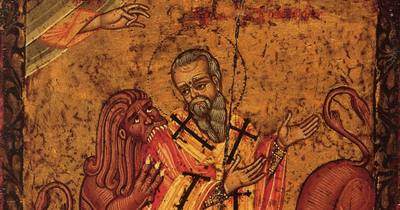
Women in the Bible & the Early Church Deborah, Phoebe, Junia, and the deaconesses of the early church, with what the restriction passages actually addressed. More than "be silent," and more careful than the slogans on either side. Open → David's Mighty Men Slingers who never missed, a man who fought till his hand froze to his sword, three who broke an army line for a cup of water, Benaiah who killed a lion in a pit on a snowy day. Real courage, and the King it points to. Open → Do Animals Have a Soul? An honest question held with open hands: do animals have a soul, do they receive the Spirit, will we see them again? What Scripture says, and where it deliberately leaves the answer open. Open → Marriage, and the Love That Fulfills the Law What keeps a marriage and what quietly corrodes it: a covenant before God, the picture of Christ and the church, love as obedience that fulfills the law, the heart before the spouse, confession, and why no sin is ever only your own. Written as a warning, not from a height. Open →

Voices

Guides and witnesses across the centuries: Lewis the reasonable, Kierkegaard the relentless, Patrick the slave who came back, and a borrowed Screwtape voice.

C.S. Lewis The Oxford skeptic turned believer who made the ancient creed plain to a doubting age. The trilemma, the argument from longing, and the weight of every soul, all pointing back to mere Christianity. Open → Kierkegaard The melancholy Dane against a Christianity that costs nothing. We understand the Bible fine, he said; we pretend not to, because understanding obliges us to obey. On the swindlers, despair, and the self before God. Open → Patrick: The Slave Who Came Back Past the parade and the shamrocks: a teenager enslaved in Ireland who escaped, then went back to bring Christ to his captors. His Confession, and the Breastplate that binds the soul to the Trinity. Open → Letters to Tyrann A tribute to C.S. Lewis's The Screwtape Letters: a senior tempter coaches a junior one, not in destroying a soul, but in destroying a marriage through manufactured expectation and discontent. Read it upside down. Open →

More to come. On how these pages are written, see A Note on These Writings; for credits and thanks, the Sources page.