A Way Out
What God commands is not too hard, because He gives what He commands. And when we fall, the way back is already open.
Someone in a discussion online put it in one line: “What we ought to do, we can do.” He meant that God does not command the impossible. If God says “do this,” then it can be done. He is right, and Moses said it first. But the same chapter of Moses that says it also says how, and the how is the part that keeps the sentence from becoming a weight no one can carry.
It is not too hard
At the end of Deuteronomy, Moses is about to die, and Israel is about to cross the Jordan without him. He does not tell them the law is a mountain they will never climb. He tells them the opposite:
For this commandment which I command thee this day, it is not hidden from thee, neither is it far off. It is not in heaven, that thou shouldest say, Who shall go up for us to heaven, and bring it unto us, that we may hear it, and do it? Neither is it beyond the sea, that thou shouldest say, Who shall go over the sea for us, and bring it unto us, that we may hear it, and do it? But the word is very nigh unto thee, in thy mouth, and in thy heart, that thou mayest do it.
Deuteronomy 30:11-14
The word the King James renders “hidden” means “too difficult.” It is the same Hebrew word God uses to Abraham when Sarah laughs: “Is any thing too hard for the LORD?” (Genesis 18:14). So Moses is saying: this is not too hard for you.
The rest of Scripture says the same thing, again and again. God told Cain, before he killed his brother, that he could still master what was crouching at his door: “sin lieth at the door. And unto thee shall be his desire, and thou shalt rule over him” (Genesis 4:7). Micah reduces the whole of it to three things: “what doth the LORD require of thee, but to do justly, and to love mercy, and to walk humbly with thy God?” (Micah 6:8). John writes, “his commandments are not grievous” (1 John 5:3). And Jesus Himself:
Come unto me, all ye that labour and are heavy laden, and I will give you rest. Take my yoke upon you, and learn of me; for I am meek and lowly in heart: and ye shall find rest unto your souls. For my yoke is easy, and my burden is light.
Matthew 11:28-30
Paul says the same about temptation: it never exceeds what can be borne, and there is always a door. “God is faithful, who will not suffer you to be tempted above that ye are able; but will with the temptation also make a way to escape, that ye may be able to bear it” (1 Corinthians 10:13). That promise has a letter of its own on this site (Temptation: Being Drawn, and the Way of Escape). So the first half of the sentence stands. What we ought to do, we can do.
Five verses earlier
Here is what is easy to miss. Five verses before Moses says “it is not too hard,” he says why:
And the LORD thy God will circumcise thine heart, and the heart of thy seed, to love the LORD thy God with all thine heart, and with all thy soul, that thou mayest live.
Deuteronomy 30:6
The commandment is not too hard because God is the one who changes the heart that has to keep it. And when Paul reads this same passage, he reads it as Christ. The word that is “nigh thee, even in thy mouth, and in thy heart” is “the word of faith, which we preach”: no one has to climb to heaven to bring Christ down, or go down into the deep to bring Him up from the dead, because He has already come, and died, and risen (Romans 10:6-9). What is near to us is not a list. It is a Person.
Ezekiel shows the same thing from two sides. In chapter 18 God commands: “make you a new heart and a new spirit: for why will ye die, O house of Israel?” (Ezekiel 18:31). In chapter 36 God promises the very same thing: “A new heart also will I give you, and a new spirit will I put within you… And I will put my spirit within you, and cause you to walk in my statutes” (Ezekiel 36:26-27). The command and the promise are the same new heart. What God asks for, He gives. Jeremiah heard it too: “I will put my law in their inward parts, and write it in their hearts” (Jeremiah 31:33). And David prayed it: “I will run the way of thy commandments, when thou shalt enlarge my heart” (Psalm 119:32).
Paul holds both halves in one sentence: “work out your own salvation with fear and trembling. For it is God which worketh in you both to will and to do of his good pleasure” (Philippians 2:12-13). We work, because God is working in us. And Jesus gave the other side of it plainly: “without me ye can do nothing” (John 15:5). The law was never the problem. “What the law could not do, in that it was weak through the flesh,” God did by sending His Son, “that the righteousness of the law might be fulfilled in us, who walk not after the flesh, but after the Spirit” (Romans 8:3-4).
Give what you command
This exact question divided the church once already. Augustine prayed a short prayer, several times, in his Confessions:
“And my whole hope is only in Thy exceeding great mercy. Give what Thou commandest, and command what Thou wilt.”
Augustine, Confessions 10.29 · c. AD 400Years later he told what happened when a fellow bishop repeated those words in Rome in front of Pelagius, the monk who taught that a man can keep God's law by his own nature:
“Which words of mine, Pelagius at Rome, when they were mentioned in his presence by a certain brother and fellow bishop of mine, could not bear; and contradicting somewhat too excitedly, nearly came to a quarrel with him who had mentioned them.”
Augustine, On the Gift of Perseverance 53 · c. AD 429Pelagius agreed that God does not command the impossible. What he could not bear was the idea that we must ask God for the ability. Augustine agreed with the first half too, and said so in almost the same words, but he kept the second half:
“God therefore does not command impossibilities; but in His command He counsels you both to do what you can for yourself, and to ask His aid in what you cannot do.”
Augustine, On Nature and Grace 50 · c. AD 415A little later in the same book he joins together the very verses above, the light burden, the commandments that are not grievous, and Deuteronomy 30 as Paul reads it, and he names what makes the burden light: love. “Now all things are easy for love to effect, to which (and which alone) ‘Christ’s burden is light’… How, indeed, can it be grievous, when it is the precept of love? Either, therefore, a man has not love, and then it is grievous; or he has love, and then it is not grievous” (On Nature and Grace 83). “Love is the fulfilling of the law” (Romans 13:10), and that love is not something we produce: it “is shed abroad in our hearts by the Holy Ghost which is given unto us” (Romans 5:5).
Chrysostom, preaching on the way of escape in 1 Corinthians 10, holds both hands the same way: “the ability lies in God’s gracious influence; a power which we draw down by our own will” (Homily 24 on 1 Corinthians, preached at Antioch). The will is real, and the power is His.
So the sentence from that discussion is right, with one clause added. “It is up to us to be faithful” is a sentence Pelagius would have signed. “What we ought to do, we can do, because He gives what He commands” is the sentence Moses wrote.
And He moves first. The one thing to add is the order. God does not wait at a distance for a man to find the will to come; He comes first, and the coming is how the will is found. “The goodness of God leadeth thee to repentance” (Romans 2:4). “And I, if I be lifted up from the earth, will draw all men unto me” (John 12:32). When the church in Jerusalem heard that the Gentiles had believed, they did not praise the Gentiles; they said, “Then hath God also to the Gentiles granted repentance unto life” (Acts 11:18). But the drawing can be refused. Stephen said it to the council’s face: “ye do always resist the Holy Ghost” (Acts 7:51). So no one comes on his own, and no one is dragged. “We love him, because he first loved us” (1 John 4:19).
The other answer, fairly stated
Many Christians answer this question the other way, and their reason deserves to be heard. No one but Christ has kept the law perfectly. “If we say that we have no sin, we deceive ourselves” (1 John 1:8). So, they say, when Jesus calls His yoke easy, He cannot mean that we actually carry it well. He means that for those who are in Him, the failure is no longer counted against them. Calvin, in his answer to the Council of Trent, and the Lutheran Martin Chemnitz, in his Examination of it, both answered it that way, and there is truth in it: there is “no condemnation to them which are in Christ Jesus” (Romans 8:1), and the believer's hope rests on that, not on his record.
The difficulty is in the next verse, which says why there is no condemnation: they “walk not after the flesh, but after the Spirit.” Robert Bellarmine answered Calvin with a picture from the farm. If oxen under a yoke fell at every step, he said, and the ploughman lifted them up each time, no one would call that yoke easy; it would be the hardest yoke there is (On Justification IV.11). A yoke that is easy only because the falling is forgiven is not what Moses or Jesus described. Both things are true together: we still stumble, and we need forgiveness every day; and the commandment really can be kept, because the Spirit keeps us in it. Augustine held both. He taught that no one in this life lives without any sin at all, and also that God does not command the impossible. His later followers kept the first sentence and lost the second, which is the pattern described in The Label and the Man. The wider question of who does what, God or man, is weighed at length in Predestination and Free Will.
There is an error on the other side as well. If the burden is light, some decide nothing is asked at all, and grace becomes permission. That is the error answered in Hyper-Grace. The light yoke is still a yoke.
And if you fall
Moses did not stop at “it is not too hard.” He went straight on: “See, I have set before thee this day life and good, and death and evil… But if thine heart turn away… ye shall surely perish… therefore choose life” (Deuteronomy 30:15-19). Paul did the same, just before the way of escape: “let him that thinketh he standeth take heed lest he fall” (1 Corinthians 10:12). The warnings are real, and this site does not soften them (Every Warning, Gathered). But it is worth noticing that the same passages which say “and if you do not” are full of the way home. Moses' very next words are a reason, not a threat: “for he is thy life” (Deuteronomy 30:20).
John wrote his letter “that ye sin not,” and in the same breath: “And if any man sin, we have an advocate with the Father, Jesus Christ the righteous” (1 John 2:1). The Old Testament says it as plainly:
- “For a just man falleth seven times, and riseth up again” (Proverbs 24:16).
- “Rejoice not against me, O mine enemy: when I fall, I shall arise” (Micah 7:8).
- “Though he fall, he shall not be utterly cast down: for the LORD upholdeth him with his hand” (Psalm 37:24).
- “His compassions fail not. They are new every morning” (Lamentations 3:22-23).
- “For he knoweth our frame; he remembereth that we are dust” (Psalm 103:13-14).
- “A bruised reed shall he not break, and the smoking flax shall he not quench” (Isaiah 42:3).
And there is Peter. Jesus knew Peter would deny Him, and told him so, and told him what He had done about it: “I have prayed for thee, that thy faith fail not: and when thou art converted, strengthen thy brethren” (Luke 22:32). After the denial and the resurrection, beside a fire on the beach, Jesus asked him three times, as many times as he had denied Him, “lovest thou me?” and three times gave him work to do (John 21:17). The fall was real. So was the road back, and Jesus walked it toward him first. How that road runs for a believer who has let go is the subject of The Warning and the Way Home.
Where this lands
“What we ought to do, we can do” is true. But it is not true because we are strong. It is true because the word that is near us, in our mouth and in our heart, is Christ, and He does not hand us a yoke and leave us with it. He says “Take my yoke upon you, and learn of me,” and He promises rest. The commandment is not too hard because He gives what He commands, and when we stumble under it, He is the one who lifts us up, and the one who prays for us, and the one who asks, again, “lovest thou me?”
Now unto him that is able to keep you from falling, and to present you faultless before the presence of his glory with exceeding joy, To the only wise God our Saviour, be glory and majesty, dominion and power, both now and ever. Amen.
Jude 1:24-25
The letters that go with this one
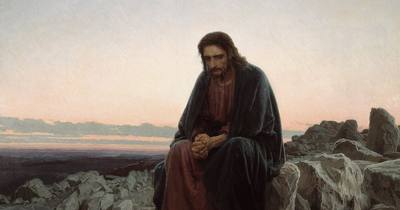
Temptation
Being drawn, and the way of escape. There is always a way out.
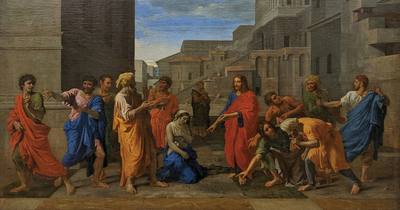
Hyper-Grace
The error on the other side: grace preached so that nothing is asked.
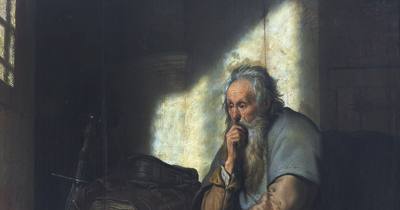
The Warning and the Way Home
What Scripture says to believers in danger of letting go, and the road back.
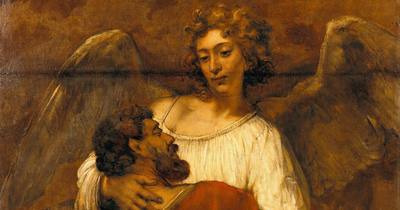
Predestination and Free Will
Who does what, God or man. Each side at its strongest.
The Label and the Man
How Augustine's answer to Pelagius became more than Augustine said.
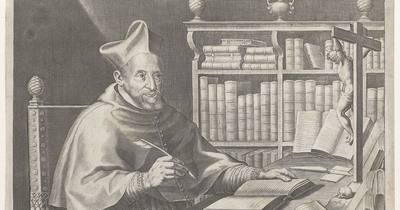
Bellarmine: The Law Is Possible
Our translation of On Justification IV.11-13: from Scripture, from the Fathers, and from reason.
Study the passages
- Deuteronomy 30:6: the Lord will circumcise thine heart
- Deuteronomy 30:11-20: not too hard; choose life
- Romans 10:6-9: Paul reads Deuteronomy 30 as Christ near
- Ezekiel 18:31 and 36:26-27: make you a new heart; a new heart will I give you
- Matthew 11:28-30: my yoke is easy
- 1 Corinthians 10:12-13: take heed; a way to escape
- Philippians 2:12-13: work out, for God worketh in you
- 1 John 2:1-2: that ye sin not; and if any man sin